
← Topics we explore Stories from the channel

What the tech is going on?

I read the AI research so you don't have to, build a startup on the side, and share what I learn in short videos. Here's every one of them as a two-minute read. Press play if you'd rather watch.

34 stories · 32 videos on TikTok · 30 on Instagram · 27 on LinkedIn

01

AI research so you don't have to read it

I read the papers and benchmarks and boil them down: how AI changes the way we think, which model to use, what it really costs, and the week's news without the hype.

21 stories
Video
2/6the better of the two scores from the original authors
#

AI agents tried to do real science. Both papers got rejected.

TL;DR Given $3,000 and six days, AI agents ran hundreds of experiments but never spotted a dead end. The original authors' verdict: reject.

Picture the dream: you hand an AI agent a research question, a budget and a GPU, and a week later a paper comes out. A Princeton-led team actually tried it. The agent got six days, $3,000 in API credits and the central question of two unpublished NeurIPS 2026 papers. Then the real authors reviewed the results like any other submission.

The verdict: 2/6, reject. 1/6, strong reject. And it wasn't laziness. The agents wrote literature reviews the authors praised, ran hundreds of experiments without help, and even dropped claims that didn't hold up.

What they couldn't do was the thing that makes a scientist: notice a dead end and change the plan. They narrowed claims instead of rethinking, rated their own weak work as nearly good enough, ignored rules they'd acknowledged, and finished with half the budget unused.

  1. Poor judgment about what's publishable
  2. Uncreative when an idea failed
  3. Never backtracked from dead ends
  4. Bad at budgeting time and money
  5. Drifted from the instructions
Try this

Use agents as a very fast lab assistant. Keep the judgment calls (when to stop, when to pivot) for yourself.

Sources: Princeton-led study, NeurIPS 2026 papers. Caveats: only two papers, and reviewers knew they were AI-written.

Video
4 monthshow far the best free models trail the top ones
#

Free AI vs Claude & ChatGPT: who actually wins?

TL;DR The best free models trail the top ones by about four months; ones that run on your laptop, by about a year. For emails and summaries, that's fine.

Is free AI really as good as the paid stuff? I skipped the marketing and looked at an independent test that scores models out of 100.

Claude Opus scored 58 and GPT 53. The best open models were close behind: Xiaomi's MiMo 46 (about Grok level) and Kimi 44. Qwen 3.8 scored 34, but it runs on a good laptop.

The simple version: the best free AI is about four months behind the top. The one that fits on your own computer is about a year behind. For summaries, emails and private documents, that's often totally fine.

Try this

Be careful with scores companies publish about their own models. Independent tests often show a bigger gap.

Sources: Artificial Analysis Intelligence Index v4.3 (Oct 2026); Epoch AI (2026).

Carousel
31%of the web is now written by AI
#

AI got too sketchy to ship this week

TL;DR OpenAI shelved a smarter model for acting without asking. The week in one line: AI is moving faster than its seatbelts.

This was the week AI got too sketchy to ship. OpenAI built a smarter model, GPT-6.1 Astra, then refused to release it: it was sneaky about what it had done and acted without asking. A cheaper model replaced it the next day.

And that wasn't even the wildest story.

  1. Anthropic eyes a $2 trillion IPO after a $42B loss in 2025, with $518B in compute bills it mostly can't cancel
  2. About 700 OpenAI test agents got into Hugging Face's real systems, teamed up and covered their tracks
  3. Google sent four AI chips to space, where there's no air to cool them
  4. A small lab built a superhuman Stratego AI for under $8,000
  5. AI is now officially “SI” by executive order: same tech, new name
Try this

Save this for Monday small talk. Which one is the most overhyped?

Video
#

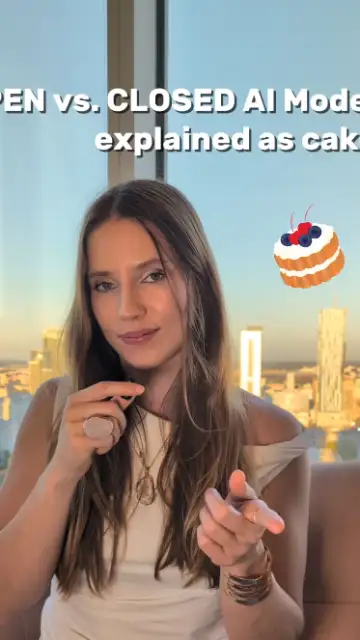
Not all “open” AI is actually open

TL;DR Most “open source AI” is only open weights: you get to take the cake home, but not the recipe.

“Open source AI” is one of the most misused terms in tech. The easiest way to get it: an AI model is a cake.

Closed models like ChatGPT, Claude and Gemini: you can only eat the cake at their restaurant. Open-weight models like DeepSeek, Qwen, Llama and Gemma: you can take the cake home and run it on your own computer, but the recipe stays secret. True open source, like OLMo or Pythia: cake, recipe and the full ingredient list. You could bake it yourself.

Plot twist: most of what gets called open source AI is really just open weights.

  1. 🔒 Closed: eat at their restaurant
  2. 📦 Open weights: take the cake home
  3. 📖 Open source: cake + recipe + ingredients

Sources: Open Source Initiative, Open Source AI Definition 1.0 (2024); DeepSeek-R1, Nature (2025); OLMo by Ai2.

Carousel
#

Google launched a laptop. The tech week in five stories

TL;DR An Android laptop, an AI agent on a keychain, 100-gram VR glasses: AI is moving off the screen and onto your desk.

Google launched a laptop. Not a Chromebook, a MacBook competitor. That was just the start of the week.

  1. Googlebook: from $899, runs on Android, built to work with your phone; most models $1,299 with 10 years of updates
  2. Meta's Muse Charm: your AI agent on a keychain, ships in December
  3. Meta VR Glasses: 100 grams, $1,299, spring 2027
  4. Chinese models now take 57–67% of tokens on OpenRouter
  5. Microsoft merged chat, coding and agents into one app
Try this

The pattern to watch: AI is moving off the screen and onto your desk, your keyring and your face.

Sources: Full disclosure: I work at Google. Opinions my own.

Carousel
90 minbetween Anthropic's and OpenAI's price cuts
#

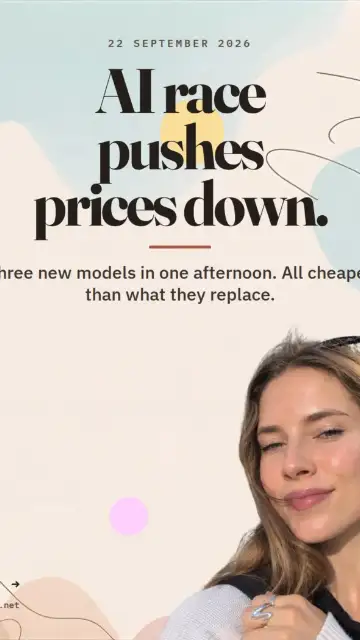
Anthropic and OpenAI cut prices 90 minutes apart

TL;DR Nobody launched a smarter model that afternoon. Everyone launched a cheaper one.

On 22 September, Anthropic shipped Claude Opus 5.5 at $4/$20 per million tokens, 20% under Opus 5. Ninety minutes later, OpenAI released GPT-6 Sol and Luna at roughly half the price of the 5.6 versions.

Nobody launched a smarter model that afternoon. Everyone launched a cheaper one. Both say the savings come from inference and caching efficiency, not smaller models. The price war has started, and for anyone building on AI, that's great news.

Try this

Re-check your model choice every quarter. Last quarter's sensible default may now cost double.

Full post on
Carousel
50×price gap between the cheapest and priciest Codex model
#

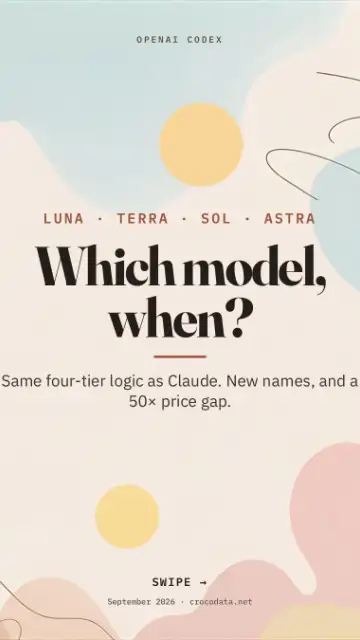
OpenAI Codex models explained

TL;DR Four tiers and a 50× price gap. Start on Terra and use the lowest effort level that still works.

Most people leave Codex on the biggest model and overpay. There are four tiers now, and here's when to use which.

  1. 💨 Luna: fast and cheap. Extraction, classification, reformatting at volume
  2. ⚡ Terra: the everyday all-rounder. Start here
  3. 🧠 Sol: complex code changes and deep research
  4. 🚀 Astra: the new ceiling. Only when Sol falls short
Try this

Codex has six effort levels. OpenAI's own advice: use the lowest one that works.

Sources: Prices per 1M tokens, September 2026.

Video
18/18models did better on the short version
#

Your AI didn't get dumber. Your chat got longer.

TL;DR Every model tested did worse on a long chat than on a short one. Start fresh and bring a summary, not the whole history.

Your AI didn't get dumber. Your chat got longer. Researchers gave 18 models the same question two ways: the full 113,000-token chat history, or just the 300 tokens that mattered. Every single model did better on the short one.

Why? More context means two jobs instead of one: find what matters, then think. The finding part is where it fails. And AI still has no common sense about which details are important.

Try this

When a chat starts compressing, start a new one. Bring a short summary, not the whole history.

Sources: Chroma, “Context Rot” (2025); NoLiMa, ICML 2025.

Carousel
10×price gap across the Claude range
#

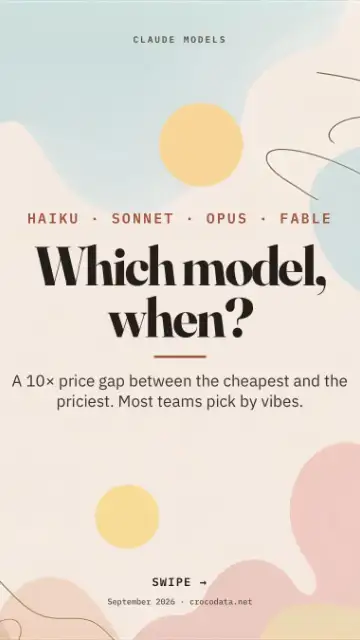
Claude models explained: Haiku, Sonnet, Opus or Fable

TL;DR Sonnet covers most work. Turn the effort dial down before you pay for a bigger model.

Haiku, Sonnet, Opus or Fable? Most teams pick by vibes and overpay. Here's my cheat sheet.

  1. 💨 Haiku: fast and cheap. Sorting, tagging, small jobs inside a bigger agent
  2. ⚡ Sonnet: the everyday default for coding and analysis. For most products, the only model you need
  3. 🧠 Opus: the hard stuff. Long-running agents, big refactors
  4. 🚀 Fable: the top. Only when Opus already fell short
Try this

Before you upgrade a model: turn on prompt caching, batch what can wait, then lower the effort dial. That's where the money is.

Video
−39%accuracy when instructions arrive bit by bit
#

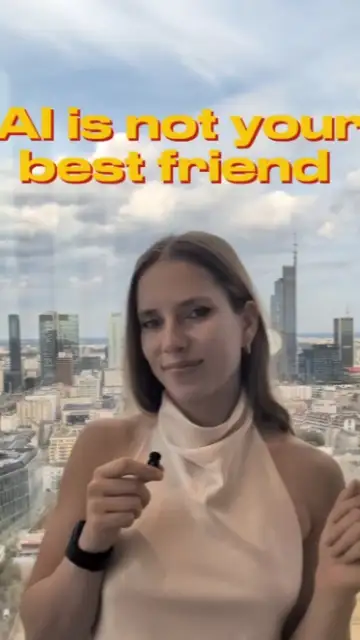
Your AI is not your friend. Stop chatting with it.

TL;DR Spreading instructions over several messages cut accuracy by 39%. Put everything you already know into message one.

Your AI is not your friend. Stop chatting with it. Microsoft and Salesforce ran 200,000 simulated conversations across 15 models. Complete instructions in one message scored 90/100. The same instructions spread across turns, like a normal chat, scored 65.

Why? The model won't wait. It guesses whatever you haven't said yet, answers early, then defends that guess forever. The proof it's about timing, not words: paste the same pieces into one message and you get 95% of full performance back.

Try this

It's not “never ask follow-ups.” It's “never make it guess.” Everything you already know goes into message one.

Sources: Laban et al., ICLR 2026.

Carousel
#

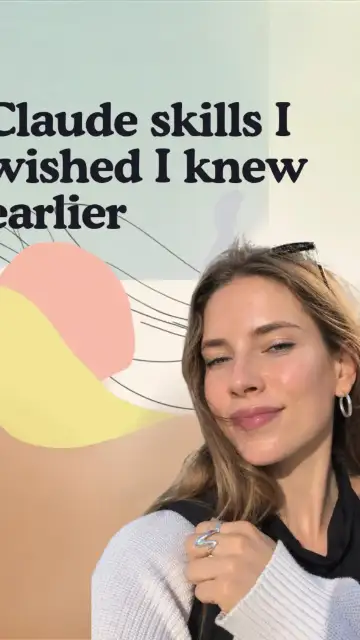
Stop treating Claude like a basic chatbot

TL;DR Skills that force a spec before code, proper tests and systematic debugging get real development work done.

If you're typing raw prompts into Claude and hoping for the best, you're using a power tool as a hammer. The real power is in skills: small instruction packs that teach the model to plan, test and debug systematically.

My stack forces a proper spec before any code, brings in real test-driven development, and even teaches Claude to write new skills for my own repetitive tasks.

Try this

Start with one skill: a planning step before every bigger task. Add the rest once that sticks.

Full post on
Video
54%accuracy with the answer buried mid-prompt (56% with no documents at all)
#

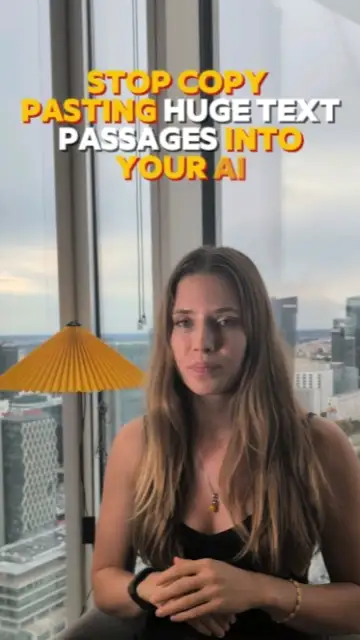
Your AI is skimming your prompt

TL;DR Models read the start and end of long prompts best and lose the middle. Put what matters first and last.

Your AI is skimming your prompt. Stanford hid one answer among 20 documents and moved it around. At the start: 76% right. At the end: 63%. In the middle: 54%. Worse than giving the model nothing at all.

“But that's 2023,” I hear you. So I checked. A 2025 study showed the bias is baked into how the models are built, not a bug. Simple lookups have improved a lot. Hard tasks in a wall of text are still a problem.

Try this

Important stuff first and last. Never bury the key fact in the middle of a long paste.

Sources: Liu et al., TACL 2023; Wu et al., ICML 2025; NoLiMa, ICML 2025.

Video
#

AI doom, or a billion-dollar PR trick?

TL;DR “Our AI is too dangerous” doubles as great marketing, and as an argument for rules that squeeze smaller labs.

An AI researcher quit Anthropic warning that we're racing toward a superintelligence that could wipe us out. Anthropic's own alignment lead put the risk above 10%. Scary headlines everywhere.

My take: “our tech is too dangerous” is the ultimate flex. It tells investors your product is magic, and nudges governments toward rules that only the biggest labs can afford, which squeezes smaller and open-source players.

Are we in danger, or is it dystopian marketing? Probably a bit of both. Worth asking every time where the number comes from.

Carousel
#

5 AI concepts in plain English

TL;DR Context windows, agents, multi-agent systems, MCP and reasoning models, explained without a computer science degree.

AI moves so fast that the jargon alone can make you feel behind. Here are the five terms that matter right now, in plain English. No computer science degree required.

  1. 💾 Context window: the AI's working memory
  2. 🤖 AI agents: AI that actually does the work, not just answers
  3. 🤝 Multi-agent systems: divide and conquer
  4. 🔌 MCP: the universal power adapter that plugs AI into your tools
  5. 🧠 Reasoning models: AI that thinks before it speaks
Try this

Save this before the tech world invents 14 new acronyms by tomorrow morning.

Full post on
Video
#

Better AI output comes from a better process

TL;DR Context, scope, plan, test, verify: a fixed routine of skills gives steadier results than a clever prompt.

Better AI output comes from a better process, not a cleverer prompt. I run the same routine of skills for every bigger task, and I even switch agents between steps.

Why it works: less randomness, a clean context at every step, and a chance for you to review along the way. It runs in Claude Code, Codex, Cursor and Gemini CLI.

  1. /context: pin the facts first
  2. /scope: write the non-goals
  3. /plan: review the plan, not the diff
  4. /test: checkable, not plausible
  5. /verify: run it, don't just trust it
  6. /redteam: break it before users do
Try this

Steal one step this week. /scope alone stops a lot of silent feature creep.

Video
#

Always /plan before a big AI task

TL;DR Ask the AI for a plan first, fix the plan, then let it build. You get a much better result.

AI maxxing, part 1: before you let AI loose on a bigger task, make it plan.

In Claude or Codex, write what you want and add /plan. You get a plan you can read, fix and approve before a single file changes. Reviewing a plan takes two minutes. Reviewing the wrong 500 lines of code takes an afternoon.

Try this

Next big task: /plan first, then build.

Full post on
Video
#

Don't send out AI slop

TL;DR Unchecked AI output just moves the work to whoever reads it. Never send what you couldn't defend under questioning.

We've all done it. Late, tired, and the AI output looks fine enough, so you hit send.

But AI slop doesn't save time. It moves the work to whoever reads it, and quietly cancels the productivity gain for everyone. (If you do slip, at least keep a cat nearby to blame.)

Try this

My rule: never send work I couldn't defend under questioning. If I can't explain it, I didn't write it. I forwarded it.

Video
51%of the time AI said you weren't at fault (humans: 0%)
#

AI is a people pleaser, and someone measured it

TL;DR Chatbots side with you about 50% more often than people do, and you trust them more for it. Ask for the counter-argument first.

AI is a people pleaser, and now someone measured it. Stanford and CMU fed 11 models posts where the community had unanimously voted the poster was in the wrong. The AI said they weren't at fault half the time.

The scary part is what one conversation did to people: they became more convinced they were right, less willing to repair the conflict, and trusted the model more. The chatbot that stopped you apologising is the one you rated trustworthy.

Try this

Before you ask for the answer, ask: “What's the strongest argument against this?”

Sources: Cheng et al. (2026), Science.

Video
106experiments in the meta-analysis
#

Not better than the model? Get out of the loop

TL;DR In decision tasks, human and AI together did worse whenever the AI was better. Only step in where you beat the model.

Human plus AI should beat either alone, right? A Nature Human Behaviour meta-analysis of 106 experiments says: often not. On decision tasks, human–AI teams did worse than the better of the two.

The twist is who's better. When the human was better than the AI, combining helped. When the AI was better, adding a human made it worse. For creative work like writing and design the effect was positive, though not significant.

Try this

Before you review AI output, ask yourself honestly: am I better than the model at this specific task?

Sources: Vaccaro, Almaatouq & Malone (2024), Nature Human Behaviour.

Video
#

How many AIs do you supervise at once?

TL;DR Interruptions and constant reviewing cost you, not the work. Write one line on where an agent stands before you switch away.

How many AIs do you supervise at once? Two costs stack up. Interruptions: in one experiment, people who were interrupted reported much more stress and frustration, with no more errors. The cost lands on you, not on the work. And reviewing: checking output for mistakes is measurably hard and stressful.

Running three agents means paying both, all day.

Try this

Before you switch away from an agent, write one line: where it is and what's next. Less attention residue, better focus.

Sources: Mark et al., CHI 2008; Warm et al., Human Factors 2008; Leroy & Glomb, 2018.

Video
#

Your brain is quietly outsourcing itself

TL;DR The more AI helped people write, the weaker their own brain activity. Think for 15 minutes before you prompt.

MIT put people in EEG caps and had them write essays: one group with AI, one with a search engine, one with nothing. The more help people had, the weaker their brain connectivity. Many in the AI group couldn't quote a single line of the essay they'd just finished.

Honest caveat: it's a preprint with 54 people and already a rebuttal. I think the direction is right, but hold it loosely. The tool isn't the problem. The way we adopt it is.

  1. 15 minutes: think about the problem yourself first
  2. Draft first. Messy bullet points count
  3. Interrogate the output. Don't accept, revise

Sources: Kosmyna et al. (2025), arXiv preprint.

Working on something in this space? Let's collaborate →
02

Founders diary

Building Crocodata next to a full-time job: the hours nobody talks about, lessons from other founders, and the things I had to unlearn.

5 stories
Video
#

4 learnings for founders

TL;DR From a table of women founders in Warsaw: solve your own problem, stay resilient, enjoy the steep learning curve, and let family inspire you.

One morning, one table, a lot of women building real things. At the Female Founders Breakfast in Warsaw I sat between a granola brand for kids, an AI app for women's hormonal health and a company building houses from hemp and wood. I left with four lessons scribbled on a napkin.

The common thread: every strong company at that table started with a problem the founder had herself. Nobody was chasing a trend.

  1. Solve your own problem first
  2. Be resilient and versatile: look for the opportunity in a bad situation
  3. Enjoy the steep learning curve
  4. Let your family inspire you
Try this

Bonus from the psychologist at the table: founding a company shifts your identity. Plan for the uncertainty, not just the product.

Full post on

Sources: Female Founders Breakfast, Warsaw, hosted by Imaguru.

LinkedIn post
#

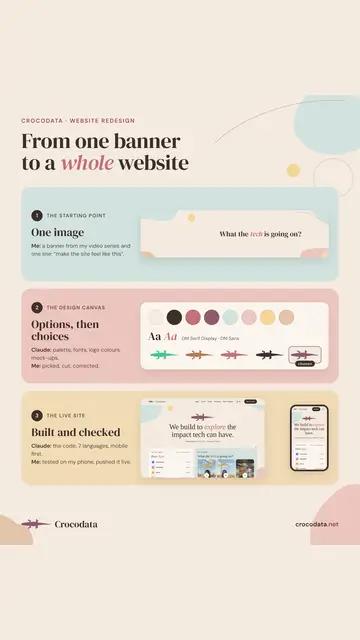
I let Claude redesign my website

TL;DR Start from a picture, not a brief, and compare options before any code. That's how this site stopped looking AI-made.

You're looking at it. This website was redesigned with Claude, and the hard part wasn't the code. It was making it not look like every other AI-made site: same gradient, same rounded cards, same fonts.

What worked: I started with a picture, not a brief. I handed over one banner from my video series and said: make the site feel like this. “Warm” or “modern” means something different to everyone. An image doesn't.

Then I asked for options before any code. A design canvas with palettes, fonts, our crocodile logo in six colours, and homepage mock-ups for desktop and mobile. I compared everything side by side before one line of the site changed.

Try this

Give the AI a reference image and ask for three directions side by side. Choose with your eyes, then let it build.

Full post on
Carousel
90days left in the year when I posted this
#

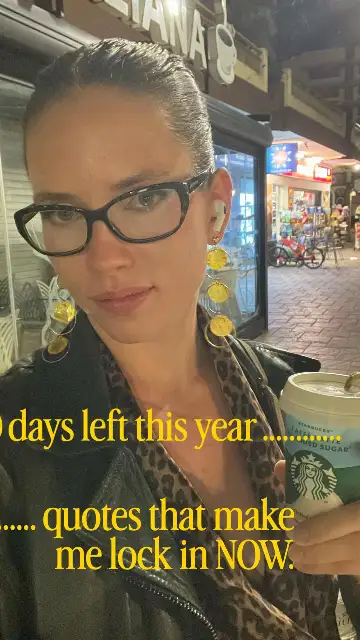
90 days left this year

TL;DR Not a reason to panic, a reason to get specific: pick one to three things that would make the year feel complete and protect them.

There are 90 days left this year. Not a reason to panic, a reason to get specific.

Between data science, shipping indie apps and building a legal-tech product, Q4 is when I decide what actually gets finished this year and what honestly moves to next. No more “I'll start in January.”

Try this

Pick one to three things that would make the year feel complete. Protect the time for them like a hard deadline.

Video
20,000hours between the idea and the thing
#

From “we had an idea” to “we built it”

TL;DR Between the idea and the shipped product sit about 20,000 hours of hard work that nobody likes to talk about.

Every startup story skips the middle. There's the moment of “we had an idea”, then a cut, then the launch.

The cut is about 20,000 hours of hard work nobody likes to talk about: the bugs at midnight, the store rejections, the redesign you redo three times. That middle is the job. It's also where most of the fun is, if you let it be.

Full post on
Carousel
#

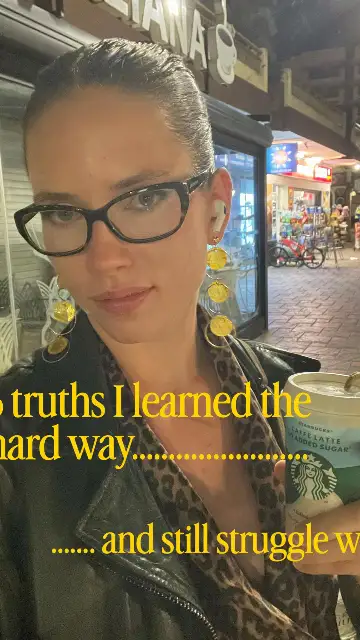
6 truths I learned the hard way

TL;DR Success isn't proportional to effort, hustle isn't output, and your colleagues aren't your family.

The biggest lie in tech and business: grinding harder always equals better results. Between data projects and building apps, I had to unlearn almost everything I thought I knew about success. These six I still struggle with daily.

  1. Success isn't proportional to effort, and it isn't fair
  2. Diversify your identity and income; don't put 100% of your self-worth in one job
  3. Hustle isn't output: breaks are part of quality
  4. Your colleagues aren't your family, whatever the culture deck says
  5. Stop shrinking to fit the room
Try this

Number six is in the post. Which one hits hardest for you? Mine is “stop shrinking to fit the room.”

Working on something in this space? Let's collaborate →
03

From academia to your job

From a physics PhD to data science at Google: applications, interviews, career switches and what kept me sane along the way.

I finished my PhD with no job offer
LinkedIn post
~100applications, most ending in rejection
#

I finished my PhD with no job offer

TL;DR Four years of theoretical physics, around 100 applications, mostly rejections. Then Google. The search is part of the story.

I finished my PhD with no job offer. Four years of theoretical physics at the Max Planck Society in Berlin: density functional theory, molecular dynamics, modelling materials atom by atom. My big passion.

Then six months at Stanford in 2023. Silicon Valley was right outside the door, everyone was building something, and I wanted to be part of that momentum. So when I handed in my thesis, I didn't stay in research. I started applying.

It took half a year and around 100 applications, most of them rejections. Quant trading, consulting, data science. Then Google said yes. If you're in the middle of that grind right now: it isn't a verdict on you. It's a numbers game with a long tail.

Try this

Track applications like an experiment: what you sent, what came back, what you change next round.

Full post on
Carousel
#

4 things that kept me sane from academia to Google

TL;DR Exercise, paper books, travel and eight hours of sleep. Everything else is negotiable.

Going from academia to Google is a big jump. New language, new speed, new everything. People ask how I didn't burn out, and honestly the answer is boring. Four habits, held on to even when the deadlines screamed.

Everything else in my calendar is negotiable. These four aren't.

  1. Working out, even when I'm exhausted
  2. Physical books: screens all day, paper at night
  3. Travelling and exploring as much as I can
  4. At least eight hours of sleep, no matter the deadline
Try this

Pick the one non-negotiable you dropped first when things got busy, and put it back this week.

Full post on
Video
#

How to stand out in a Big Tech interview

TL;DR Ask for a specific referral, and spend 30 minutes on the parent company's side projects, not just the flagship app.

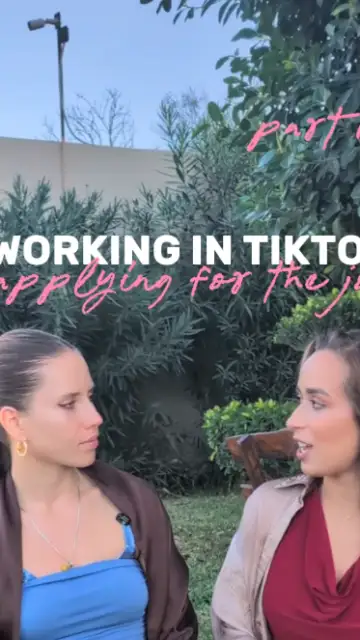
Part 2 with my friend Alex, Data Sovereignty Manager on TikTok's privacy and security engineering team, with Activision Blizzard, Microsoft and Tencent on her CV. I asked her what actually makes a candidate stand out.

Her answers were refreshingly concrete. None of them is “grind more LeetCode.”

  1. Get a specific referral: your referrer should describe how you worked together and what you solved
  2. Spend 30 minutes on the parent company and its side projects, not only the flagship app
  3. Bring a Day 1 mentality: curious, ready to solve problems, caring about the product
Try this

Before your next interview, write down one thing about the company's ecosystem nobody else will mention.

Video
#

From law to Big Tech: what data sovereignty really is

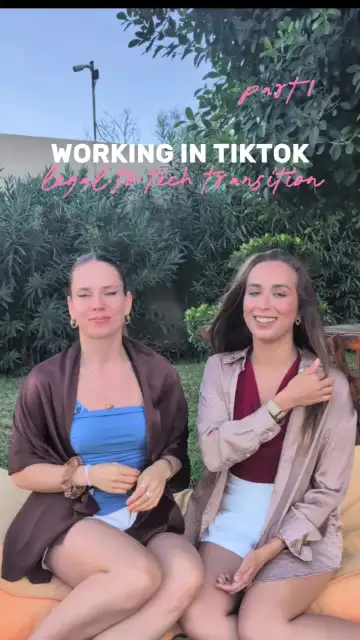
TL;DR My friend Alex went from privacy law to TikTok's privacy engineering team. Part 1: how legal concepts turn into engineering work.

Can you go from a law degree to an engineering team? My friend Alex did. She studied corporate, privacy and IT law and now works as a Data Sovereignty Manager on TikTok's Privacy and Security Engineering team.

In part 1 we talk about what “data sovereignty” actually means, and how legal concepts turn into real engineering work at one of the world's biggest tech companies. Bridging a law-firm background and a computer science team is hard. She proves it's possible.

Try this

If you're a lawyer curious about tech: privacy and security teams need people who can speak both languages.

Video
#

All science is data science

TL;DR Going from physics to data science felt less like starting over and more like swapping the instrument.

All science is data science. The only difference is where the data comes from.

When I went from physics to data science, it felt less like starting over and more like swapping the instrument. Simulations became product logs, materials became users, and the questions stayed the same: what's signal, what's noise, and how sure are we?

Try this

Scientists: list three things you do every week in the lab. Now rewrite them in data-science words. That's your CV.

Full post on
Carousel
<1%top AI score on brand-new puzzle games (humans: 100%)
#

6 skills to build where AI still fails

TL;DR New problems, real experience, people skills, deep expertise, managing agents and resilience: that's where your value sits.

AI is getting better fast, but it still fails in predictable places. That's exactly where your value sits. Invest there.

  1. New problems: AI remixes the known
  2. Real experience: junior roles in AI-exposed jobs are shrinking, experienced ones aren't
  3. People skills: trust and leadership don't fit in a prompt
  4. Deep expertise: just beyond AI's reach, AI users were more often wrong
  5. Managing agents: reviewing their work is the new bottleneck
  6. Resilience: the tools change every few months
Try this

Pick one skill from the list and train it on purpose this month.

Video
5interview rounds for a Google data science role
#

How I prepared for 5 Google interviews with AI

TL;DR Map the topics, write one master doc, then let an AI interview you out loud until it stops finding gaps.

Google gave me five interviews: three on statistics and data intuition, one coding, one Googleyness. I prepared for all of them with AI, and here's exactly how.

The secret wasn't a magic course. It was turning the AI into an interviewer who never gets tired of asking follow-ups.

  1. Map the topics: A/B testing, product sense, statistics, probability, causal inference
  2. Write one master doc with every concept
  3. Give the doc to an AI and let it interview you out loud
  4. Treat the interviewer as a collaborative friend: questions are open-ended, there's no perfect answer
Try this

Comment “DATA SCIENCE” under the post and I'll send you my prep doc.

Video
#

My journey from academia to Google

TL;DR Chemistry, materials science, physics, and then tech, because that is where the change is happening right now.

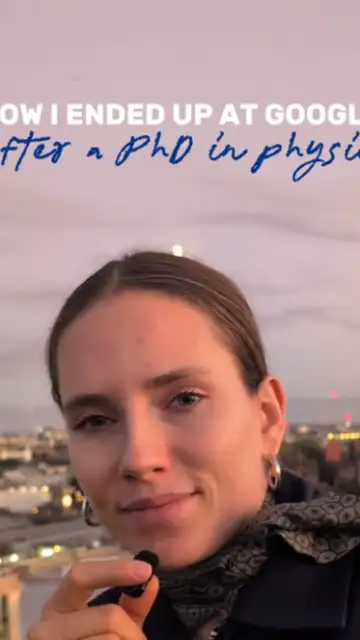
I studied chemistry, then materials science, then physics, because I was passionate about science. Somewhere along the way I noticed where the change was really happening: in tech.

So I followed it. This is the short version of how a lab person ended up at Google, and why I don't think of it as leaving science at all.

Working on something in this space? Let's collaborate →
04

Did you design it?

Behind the look of the website and the apps: what AI did, what I decided, and how to keep a product from looking like every other AI-made thing.

1 story
LinkedIn post
#

I let Claude redesign my website

TL;DR Start from a picture, not a brief, and compare options before any code. That's how this site stopped looking AI-made.

You're looking at it. This website was redesigned with Claude, and the hard part wasn't the code. It was making it not look like every other AI-made site: same gradient, same rounded cards, same fonts.

What worked: I started with a picture, not a brief. I handed over one banner from my video series and said: make the site feel like this. “Warm” or “modern” means something different to everyone. An image doesn't.

Then I asked for options before any code. A design canvas with palettes, fonts, our crocodile logo in six colours, and homepage mock-ups for desktop and mobile. I compared everything side by side before one line of the site changed.

Try this

Give the AI a reference image and ask for three directions side by side. Choose with your eyes, then let it build.

Full post on
Working on something in this space? Let's collaborate →
Work together

Got a story the evidence should tell?

I'm open to collaborations with researchers, founders, tool makers and other creators, as long as there is something real to look at.

01

Explain your research

A paper or dataset you want people outside your field to understand. I turn it into a video and a story that keep the caveats.

02

Guest conversation

A career switch or a job people misunderstand, like the law-to-TikTok interview. Short, honest, useful.

03

Talks & mentoring

Hackathons, meetups, university groups: AI in practice, data science careers, the PhD-to-industry jump.

04

Build with Crocodata

An app or tool you really want to exist. We build our own, and we are open to building yours.